

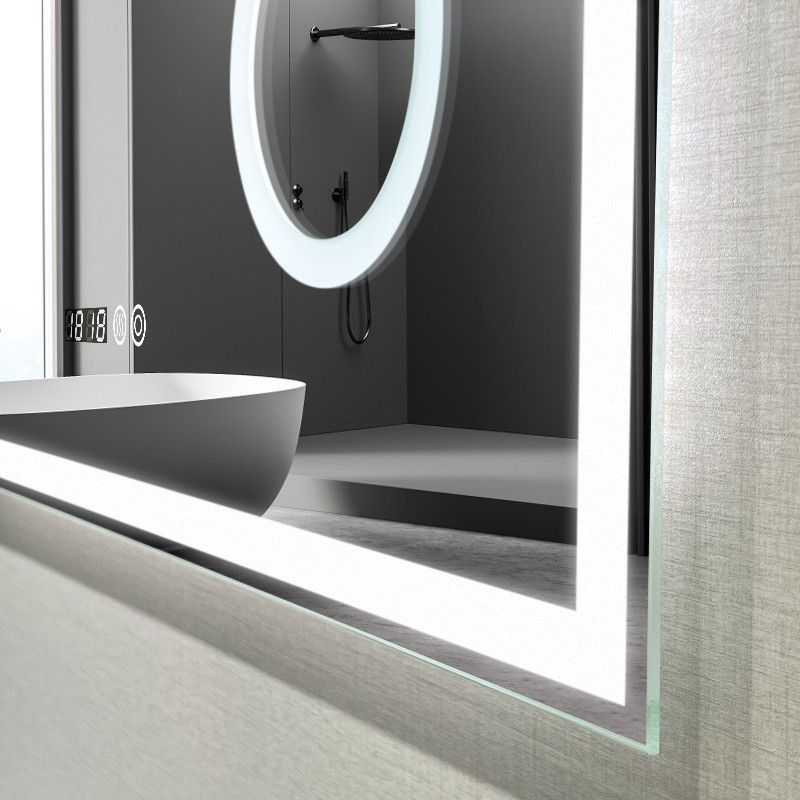
In modern building projects, mirrors are no longer simple reflective products. Designers and project teams now use mirrors as part of the lighting system, digital display, and user experience. Contractors, consultants, and developers can improve both usability and visual design by choosing the right type of mirror.
A smart mirror is a mirror with a built-in digital display. It shows information such as time, weather, and schedules, while still working like a normal mirror. Users can view information and use the mirror at the same time.
Smart mirrors combine mirror, lighting, and digital systems in one product. This makes them a practical choice for modern residential and commercial projects. Instead of installing separate screens or devices, project teams can use one product to provide multiple functions.
For B2B projects, smart mirrors are not only about technology. They also help improve efficiency, simplify installation, and create a more modern user experience.
How Smart Mirrors Work in Projects
Smart mirrors use a special glass structure. The front surface works like a normal mirror. Behind the mirror, manufacturers place a digital display.
When the display is off, the mirror looks like a standard mirror. When the display is on, users can see information through the mirror surface.
Inside the mirror, manufacturers install several components. These include LED displays, control boards, sensors, and connection modules. These components allow the mirror to show real-time data.
Most smart mirrors connect to networks through Wi-Fi or Bluetooth. This allows them to update information such as weather, time, or schedules automatically.
Some models support touch control. Users can tap the surface to control functions. Other models support voice control. Users can give commands without touching the mirror.
This system turns the mirror into an interactive product. It is no longer just a passive surface. It becomes part of the smart system in the building.
For project teams, this creates new possibilities. They can use mirrors not only for reflection but also for information display and user interaction.
Key Benefits for Building Projects
Smart mirrors offer many advantages for modern building projects.
First, they help save space. Instead of installing multiple devices, project teams can use one smart mirror. This reduces the number of items on the wall and creates a cleaner design.
Second, they improve daily use. Users can check information while using the mirror. For example, they can see time, weather, or schedules while getting ready. This saves time and improves convenience.
Third, they support modern design. Smart mirrors have a clean and simple appearance. They fit well in modern interiors, especially in high-end residential and commercial projects.
Fourth, they improve project value. Smart features make a project look more advanced and attractive. This is important for developers who want to create premium spaces.
For these reasons, many project teams choose smart mirrors to combine digital features with modern design in a simple way.
Where Smart Mirrors Are Used
Project teams install smart mirrors in many types of spaces.
Project teams use smart mirrors across many types of projects because they are flexible and easy to adapt.
In residential projects, developers place smart mirrors in bathrooms, bedrooms, and dressing areas. These mirrors help users check information while getting ready. This improves daily comfort and convenience.
In hotel projects, designers use smart mirrors to improve guest experience. Guests can check weather, time, and other information directly on the mirror. This creates a modern and high-end feeling.
In office buildings, smart mirrors can provide useful information such as schedules or notices. This helps improve efficiency in daily work.
Retail stores also use smart mirrors. Some models allow customers to try products virtually or see product information. This improves the shopping experience and can help increase sales.
Fitness and wellness spaces use smart mirrors to display training content or health data. Users can follow instructions directly from the mirror.
Healthcare environments may also use smart mirrors for information display or guidance.
Features and Functional Options
Smart mirrors include many features that improve usability.
Basic features include digital clock, weather updates, and calendar display. These functions provide useful daily information.
Many smart mirrors include adjustable lighting. Users can change brightness and color temperature. This improves both visibility and comfort.
Touch control is a common feature. Users can operate the mirror directly. Voice control is also available in some models. This allows hands-free use.
Some smart mirrors include sensors. These sensors detect motion or user presence. This helps control lighting and display automatically.
Advanced models may include cameras or recognition systems. These can provide personalized information for different users.
Some mirrors can connect with other devices in the building. This allows the mirror to work as part of a larger smart system.
Project teams can also customize size, shape, and frame design. This helps match the mirror with the overall project style.
Design Integration in Projects
Smart mirrors are not only technical products. They are also part of the design.
Designers use smart mirrors to create clean and modern spaces. The hidden display behind the mirror keeps the overall look clean and does not interrupt the design.
Smart mirrors work well with different materials such as stone, wood, and metal. This makes them easy to integrate into different design styles.
Lighting is another important factor. Many smart mirrors include built-in LED lighting. This improves both function and design.
The ability to combine lighting and display in one product helps reduce design complexity. It also creates a more organized space.
For architects and designers, smart mirrors provide both technical and visual benefits.
Project Planning and Installation
Project teams should plan smart mirror installation early.
Smart mirrors require power supply. This means electrical planning is necessary during the design stage.
Project teams choose between wall-mounted and recessed installation based on project needs.
Recessed installation creates a cleaner look. Surface-mounted installation is easier and more flexible.
Project teams should also check environment conditions. For example, bathroom mirrors should include waterproof and anti-fog features.
Another important factor is system support. The smart mirror should work well with other systems in the building. This helps avoid problems during use.
Working with a reliable supplier helps ensure correct specifications and smooth installation.
Performance and Long-Term Use
Smart mirrors are designed for long-term use in different environments.
High-quality models use stable electronic components. This helps ensure consistent performance.
LED lighting has a long lifespan. This reduces maintenance and replacement cost.
The mirror surface is easy to clean and maintain. Regular cleaning is enough for daily use.
In commercial projects, smart mirrors need to work for long periods without interruption. Stable performance is very important.
Choosing high-quality products helps reduce risk and improve project reliability.
Cost and Value Consideration
Smart mirrors may have a higher initial cost compared with standard mirrors.
However, they provide more functions. This can reduce the need for other devices.
For example, one smart mirror can replace clocks, displays, and some lighting functions.
This helps reduce installation cost and simplify the design.
In commercial projects, smart features can improve user experience. This can increase project value.
For developers, this means better positioning in the market.
For contractors, this means easier integration of multiple functions.
Conclusion
A smart mirror is more than a mirror. It combines reflection, lighting, and digital systems in one product.
Project teams use smart mirrors to improve both function and design. They help create modern, efficient, and user-friendly spaces.
In residential, hotel, retail, and commercial projects, smart mirrors provide clear value.
They help projects stand out and offer better user experience.
For contractors, consultants, and developers, smart mirrors are a practical and future-ready solution.