

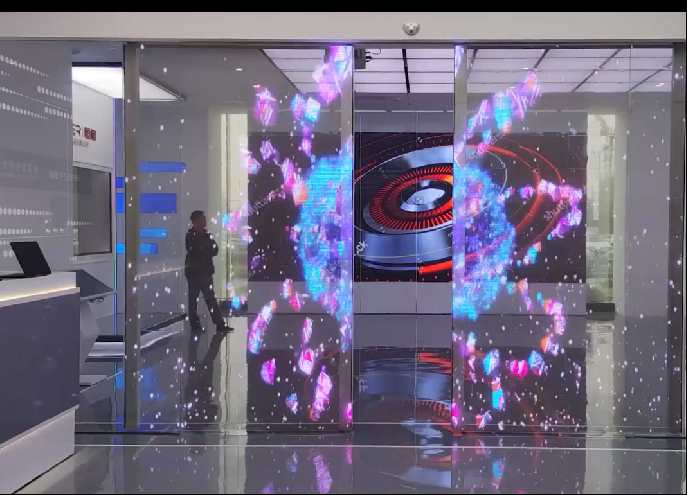
In modern commercial projects, glass facades are widely used. They bring natural light into buildings and create a clean and open appearance. At the same time, developers and building owners want to use these glass surfaces for advertising and information display.
However, traditional display solutions often create problems.
Large LED screens block natural light and reduce indoor brightness.
Box-type display systems are heavy. They require strong support structures and complex installation.
Printed posters only provide static content. Project teams need to replace them frequently, which increases cost.
These problems affect both design quality and long-term value.
Flexible transparent LED film display offers a new solution. Project teams can display digital content on glass surfaces without blocking daylight or changing the original look of the facade.
For contractors, consultants, developers, and media operators, this technology makes it easier to combine building design, lighting, and digital display in one solution.
Limitations of Traditional Display Systems
Before selecting a new solution, project teams often review the limitations of traditional systems.
Box-type LED curtain walls are bulky. They require strong support structures. This increases installation cost and construction time. They also block natural light, which reduces indoor comfort.
Louver-style display systems improve airflow but still reduce transparency. They change the original appearance of the facade. This can create concerns for designers and property owners.
Printed graphics and posters are simple but limited. They only show static images. When content needs to change, teams must replace the materials. This increases long-term cost.
Mesh or grid-style LED systems provide limited display quality. They can show basic lighting effects but do not support high-quality video content.
Because of these limitations, project teams are looking for better solutions that support both design and function.
Why Transparent LED Film Is a Better Solution
Flexible transparent LED film display solves many problems found in traditional systems.
First, it keeps transparency. The film allows natural light to pass through the glass. This means the building still receives daylight. People inside can still see outside clearly.
Second, it supports dynamic content. The display can show video, animation, and real-time information. This creates a stronger visual effect compared with static displays.
Third, it reduces structural impact. The film is thin and lightweight. Project teams install it directly on glass surfaces. There is no need for heavy frames or complex support systems.
Fourth, it improves installation efficiency. The installation process is simpler and faster. This helps reduce labor cost and project time.
Fifth, it makes approval easier. Because the system does not block light or change the main structure, it is easier to meet building and property requirements.
For this reason, project teams use transparent LED film to upgrade glass facades while keeping the original design and natural lighting.
Key Advantages for Commercial Projects
Transparent LED film display provides several important advantages for commercial use.
High Transparency with Strong Visual Effect
The display film keeps a high level of transparency. People inside the building can still see outside. At the same time, the display shows bright and clear content.
This balance is important for modern commercial buildings. It allows advertising without affecting the design of the space.
Lightweight and Easy Installation
The LED film is thin and flexible. It does not require large structures or heavy frames.
Project teams install it directly onto glass surfaces. This reduces installation difficulty and saves space.
It works well in narrow areas such as entrance doors, shop windows, and corridors.
Flexible Design Options
Project teams can cut and adjust the film to fit different sizes and shapes of glass.
Designers apply the film on flat glass as well as curved or irregular surfaces. This gives more freedom in design.
This flexibility allows the display to fit different building layouts and project requirements.
Energy Efficiency
Transparent LED film uses less power compared with traditional LED screens.
Lower energy consumption helps reduce operating costs, especially for large projects.
Easy Content Update
Project teams update display content digitally. There is no need to replace physical materials.
This reduces maintenance work and allows faster updates.
Application Scenarios
Transparent LED film display is widely used in different types of projects.
In retail stores, brands install it on glass windows. It attracts attention while keeping the interior visible. This improves both display and customer experience.
In shopping malls, developers use it on glass facades and internal glass walls. It creates a modern digital environment and increases advertising opportunities.
In office buildings, companies install it in lobbies and meeting areas. It can display company information, branding, or announcements.
In transportation areas such as airports and stations, it provides both advertising and information display.
Hotels and commercial complexes use it to create premium visual effects and improve brand image.
Because of its flexibility, the product works well in both large glass facades and smaller display areas.
Increasing Advertising Value
Transparent LED film display helps increase advertising value.
The see-through effect creates a unique visual experience. It attracts more attention than traditional display systems.
This makes it easier to attract high-end brands. Companies in automotive, luxury goods, and technology prefer high-quality display environments.
These brands are willing to pay higher advertising fees for better presentation.
As a result, building owners and media operators can increase revenue and improve return on investment.
At the same time, the modern display system improves the image of the building. This helps attract more visitors and tenants.
Project Planning Considerations
When using transparent LED film, project teams should plan carefully.
First, they should check the condition of the glass surface. It must be suitable for installation.
Second, they should plan power supply and control systems. Stable power ensures stable performance.
Third, they should select brightness and resolution based on the viewing distance and environment.
Fourth, they should consider installation method and maintenance access.
Fifth, they should check local building regulations.
Working with an experienced supplier helps ensure correct product selection and smooth project execution.
Performance and Long-Term Use
Transparent LED film is designed for long-term use.
High-quality products use stable components. This ensures consistent performance over time.
The system can run for long periods without problems. This is important for commercial applications.
The film structure also reduces heat generation. This improves safety and stability.
Maintenance is simple. Project teams can manage the system through digital control.
These features make the product reliable for long-term operation.
Cost and Value
Transparent LED film may have a higher initial cost than simple display solutions.
However, it reduces long-term cost. It does not require frequent replacement like printed materials.
It also reduces installation cost compared with traditional LED structures.
The ability to attract premium advertising increases revenue potential.
For developers and building owners, this creates better long-term value.
Conclusion
Flexible transparent LED film display provides a modern solution for glass facade applications.
It allows project teams to combine digital display, natural light, and building design in one system.
For contractors, consultants, developers, and media operators, it offers both functional and commercial benefits.
In modern commercial projects, transparent LED film is becoming an important tool for digital display and building upgrade.