

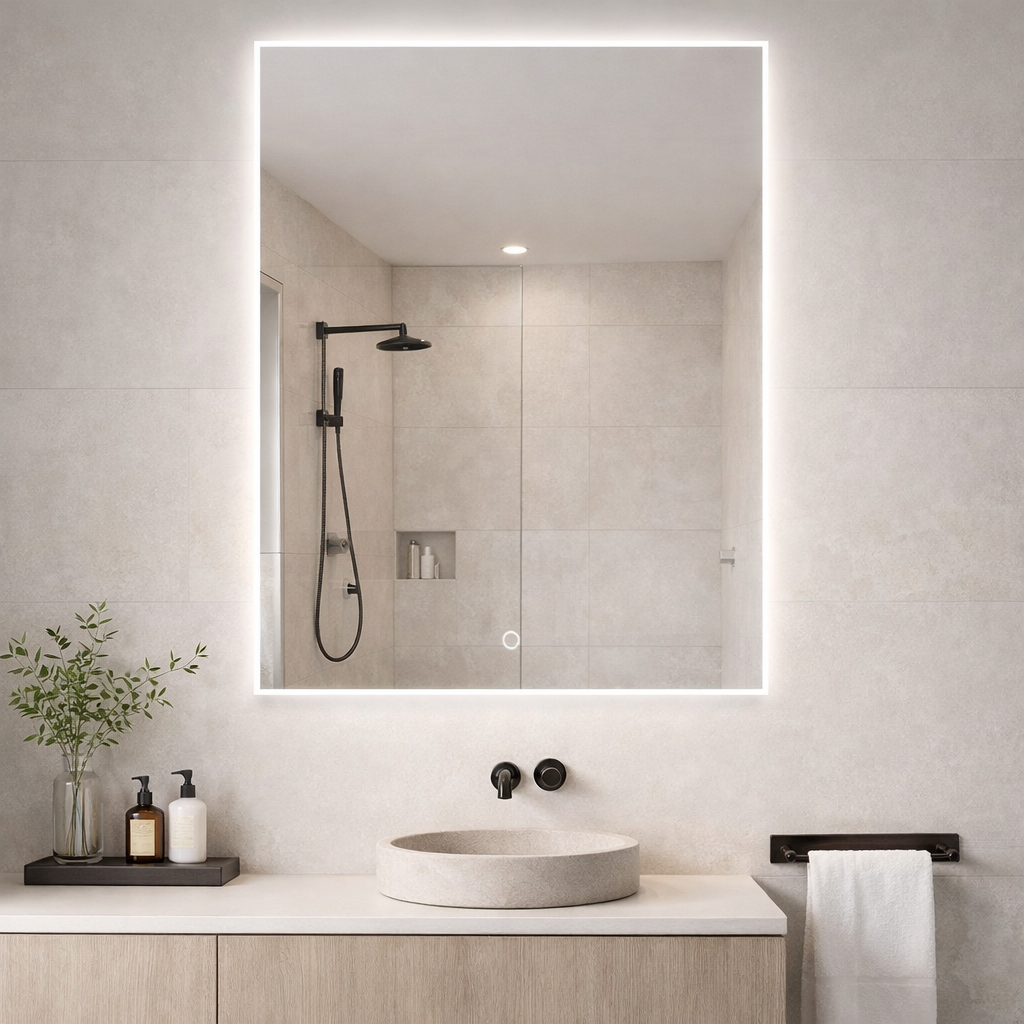
In modern interior projects, mirrors do much more than reflect images. Designers use mirrors to improve lighting, increase the sense of space, and support the overall visual design. Choosing the right mirror helps contractors, consultants, and developers create spaces that are both practical and visually appealing.
Frameless mirrors have become a popular option in recent years. Their clean and simple appearance fits well with modern design trends. Without a visible frame, the mirror blends more naturally into the wall and surrounding materials.
For B2B projects, frameless mirrors are not only decorative elements. They are also practical tools that help create brighter, more open, and more flexible spaces. Project teams often use them to improve both function and visual quality at the same time.
Why Frameless Mirrors Work in Modern Design
Frameless mirrors offer several advantages that make them suitable for modern interiors.
First, they create a clean and minimalist look. Without a frame, the mirror does not add extra visual weight to the wall. This helps reduce visual clutter and supports a simple design style.
Second, they improve the perception of space. Frameless mirrors provide a larger reflective surface compared with framed mirrors of the same size. This allows more light to reflect across the room and makes the space appear larger.
Third, they fit many different design styles. Designers can use frameless mirrors in modern, classic, or mixed interiors. They work well with materials such as tiles, stone, wood, and painted walls.
Another important feature is edge finishing. Manufacturers cut beveled edges at a slight angle to create a subtle reflective effect. This detail adds a refined look without changing the simple design of the mirror.
Frameless mirrors also offer layout flexibility. Project teams place them in different positions and layouts without limits from frame design. This makes it easier to adapt the mirror to different project requirements.
Because of these advantages, project teams use frameless mirrors in many projects that require both simple design and strong functionality.
Manufacturing and Installation Considerations
Frameless mirrors require careful manufacturing and installation.
Manufacturers cut the glass with high precision to ensure accurate dimensions. They polish or bevel the edges to improve safety and create a smooth finish. This process requires strict quality control to avoid defects.
The thickness of the mirror is also important. Project teams choose thickness based on size and application. Larger mirrors usually require thicker glass to maintain stability and prevent distortion.
Back coating plays a key role in durability. High-quality backing protects the reflective layer from moisture and corrosion. This is especially important for bathrooms and humid environments.
Installation requires proper planning. Project teams use adhesive, clips, or hidden fixing systems depending on the project design. Each method offers different benefits in terms of appearance and installation difficulty.
Accurate installation is critical for frameless mirrors. Without a frame, any misalignment becomes visible. Careful positioning helps achieve a clean and professional result.
Working with an experienced supplier helps ensure consistent quality and reliable installation support.
Design Flexibility and Layout Options
Frameless mirrors provide a high level of design flexibility.
They are available in many shapes. Standard shapes include rectangular, square, round, and oval. Designers can also create custom shapes such as hexagonal, diamond, or curved designs.
Project teams can install a single large mirror or combine multiple smaller mirrors. Designers arrange multiple mirrors to create feature walls or decorative patterns. This approach adds depth and visual interest to the space.
Frameless mirrors also allow wall materials to remain visible. Because there is no frame, the mirror does not cover the edges of tiles, stone, or other finishes. This helps highlight the texture and color of the wall.
This level of flexibility allows designers to use frameless mirrors in both functional and decorative ways.
Where Frameless Mirrors Are Used
Project teams use frameless mirrors in a wide range of applications.
In residential projects, designers install frameless mirrors in bathrooms, bedrooms, and dressing areas. These mirrors provide practical use while improving the overall design.
In living rooms and dining spaces, frameless mirrors help reflect light and create a more open environment.
In commercial projects, such as offices and retail stores, frameless mirrors create a clean and professional appearance. They help maintain a consistent design style.
In hotel projects, designers install frameless mirrors in bathrooms, corridors, and guest rooms. These mirrors support a modern and elegant interior design.
In public spaces, frameless mirrors help increase brightness and improve the sense of space.
Because they can be used in many different ways, frameless mirrors work well in both small and large-scale projects.
Performance and Long-Term Use
Frameless mirrors offer stable performance when manufactured and installed correctly.
High-quality glass provides clear reflection without distortion. Proper edge finishing reduces the risk of damage.
Durable backing protects the mirror in humid environments. This helps extend the service life of the product.
Frameless mirrors are also easy to maintain. Regular cleaning helps keep the surface clear and reflective.
In commercial projects, long-term performance is important. High-quality frameless mirrors can maintain appearance and function over time.
Value for B2B Projects
For contractors, consultants, and developers, frameless mirrors provide clear project value.
They simplify design coordination. Without a frame, the mirror is easier to match with other materials.
They provide flexible installation options. Project teams can adjust size and layout based on project needs.
They improve visual quality. Clean edges and large reflective surfaces create a high-end appearance.
In residential projects, frameless mirrors increase perceived value. Buyers often prefer simple and modern designs.
In commercial projects, they support brand consistency and interior design standards.
Although frameless mirrors require higher precision in manufacturing and installation, they offer strong long-term design benefits.
Conclusion
Frameless mirrors provide a modern and flexible solution for interior projects.
They combine simplicity, functionality, and visual impact in one product.
Designers, contractors, and developers use frameless mirrors to improve both space and design quality.
In residential and commercial environments, frameless mirrors help create bright, clean, and modern interiors.